Gayton McKenzie accused of not understanding fashion industry after his meeting with Shein
Fashion designer David Tlale said he doesn’t think Gayton McKenzie understands the complexities of the clothing and textile industry.



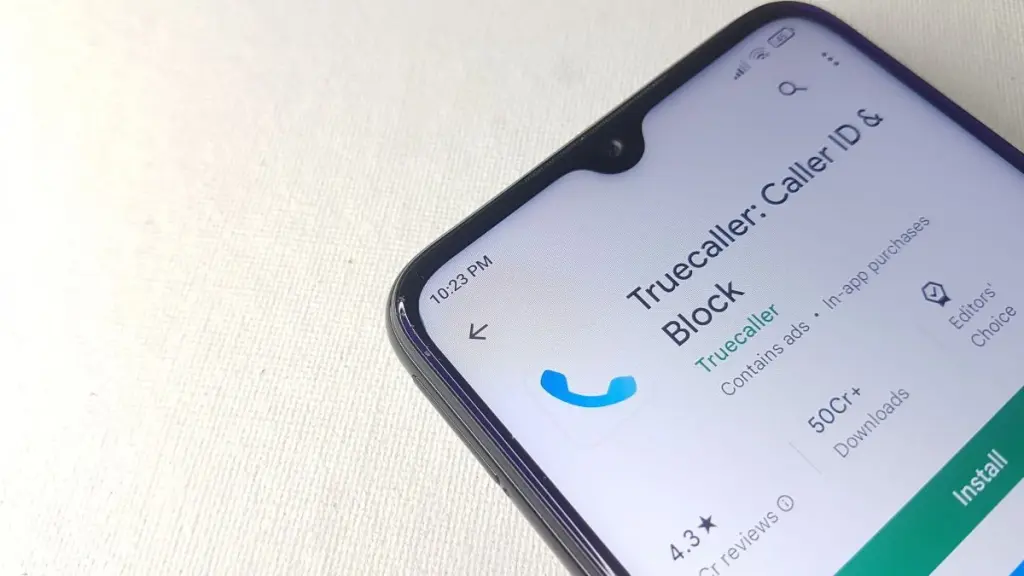
South Africans using call screening apps that require them to share their address books should be aware that these apps could be breaking the law.
Truecaller is facing scrutiny from South Africa’s Information Regulator, which is currently investigating the popular caller identification app following complaints from both companies and individuals.
According to Norton Rose Fulbright director Rosalind Lake, the regulator has confirmed that the investigation is underway but will not comment until it has concluded.
Truecaller, which many users download to identify who is calling them, has been accused of violating the Protection of Personal Information Act (POPIA).
“This follows complaints from South African companies and individuals that the app is violating the Act,” Lake said.
Truecaller has proven wildly popular in South Africa because it warns users when they may be getting a call from a spammer or scammer who obtained their number unlawfully. South Africans had a right to protect themselves from spam harassment.
However, Truecaller could be infringing on the rights of legitimate businesses, which must be allowed to contact clients who have agreed to let them do so.
The source of the problem is Truecaller’s crowdsourcing mechanism for flagging spam, which is open to abuse by malicious users or competing businesses.
She noted that the case touches on a broader issue, the balance between a business’s need to reach new customers and the public’s right to privacy.
Truecaller charges businesses a fee of $590 (R10,400) per month to have their number whitelisted for 5,000 calls, working out to roughly R2.18 extra per call.
Among the businesses that have complained about this charge is a small ISP that likened the practice to blackmail and extortion.
“It’s direct marketing, a really tricky balance. On the one hand, businesses need a chance to make new sales, but on the other hand, as consumers, we don’t want to be phoned all the time,” Lake said.

She explained that the Information Regulator enforces Popia and has issued guidelines on how direct marketing should be done responsibly.
“Popia basically says: we know you need personal data to be able to do your business, but if you’re going to use it, you’ve got to do it in a responsible way,” Lake explained.
She said the regulator will check Truecaller’s practices against the eight conditions set out in the law.
This includes informing people how their data will be used, ensuring the data is used securely, and not using more personal information than is necessary for the stated purpose.
Lake stressed that the regulator has already taken enforcement action against companies that fail to follow the rules.
In Truecaller’s case, the outcome will determine whether the platform complies with South African privacy laws and where that leaves the complainants.
“They’re going to assess it against those factors and come to a conclusion on whether they’re doing what they’re supposed to do in terms of the law,” she said.
Despite the investigation, Lake acknowledged the value of Truecaller’s service.
“I think Truecaller delivers a really useful service, and they wouldn’t be so prolific if they hadn’t identified a gap in the market,” she said.
She pointed out that South Africa never implemented the “opt-out” registry for direct marketing that was promised under the Consumer Protection Act in 2011.
The absence of this registry, along with limited enforcement in the past, has allowed services like Truecaller to thrive.
However, Lake stressed that popularity and usefulness do not exempt the platform from compliance. “I use it myself… but that doesn’t mean that the platform doesn’t have to make sure that it complies with South African data privacy laws,” she said.
She added that South Africa’s laws are unique in that businesses, not just individuals, are afforded personal information protections, meaning companies also have the right to control how their details are used.
Lake sees the investigation as an opportunity to ensure compliance and maintain the app’s role in helping people identify and avoid unwanted calls.
“This should be a welcome investigation in the sense of making sure that it is fully compliant so they can continue doing their good work,” she said.
Issued on BusinessTech by Malcolm Libera | https://businesstech.co.za/news/business/835199/warning-to-anyone-who-uses-truecaller-on-their-phones-in-south-africa/