Gayton McKenzie accused of not understanding fashion industry after his meeting with Shein
Fashion designer David Tlale said he doesn’t think Gayton McKenzie understands the complexities of the clothing and textile industry.



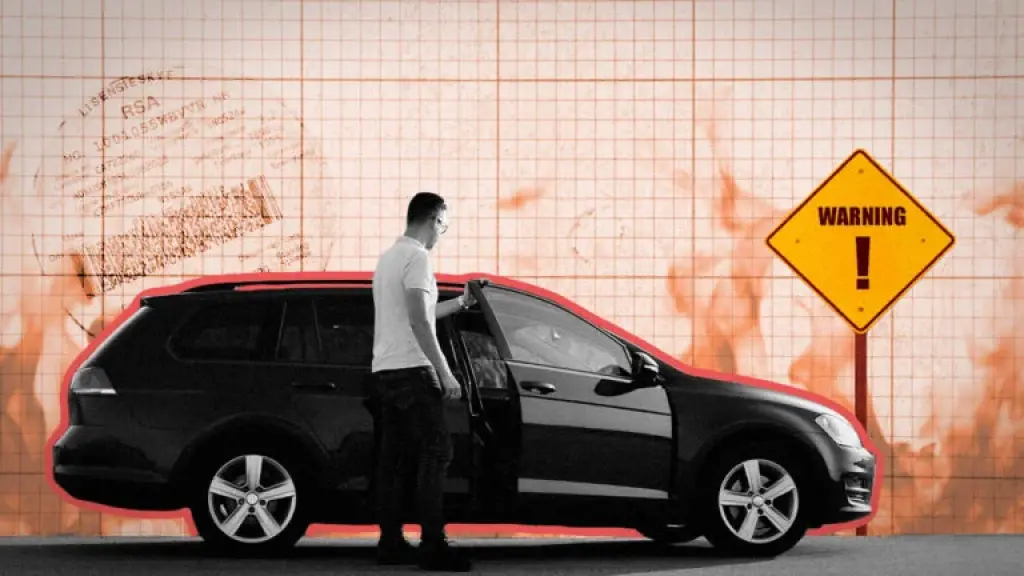
Nedbank warned that written-off cars are infiltrating South Africa’s used car market, putting unknowing buyers at risk.
South Africa’s used car market is booming. According to Mordor Intelligence, South Africa’s second-hand vehicle market is valued at $12.89 billion in 2025, and is projected to grow to $18.26 billion by 2030.
TransUnion’s Vehicle Pricing Index (VPI) for the fourth quarter of 2024 also reported that used vehicle financing outpaces new car financing, with a ratio of 1.56 to 1.
“South Africa’s automotive sector is navigating a complex landscape, balancing economic improvements with persistent affordability challenges,” said Marcia Mayaba, Sales Vice President, Auto Information Services at TransUnion South Africa.
“The demand for used vehicles continues to grow, while we’re also seeing an increasing shift towards alternative financing and ownership models, such as leasing and car subscriptions, particularly among younger consumers.”
Affordability has been a major driver behind the used car market boom, with South Africans seeking longer-term financing and lower-priced options.
However, while buying a used car can be an excellent way to save money, Nedbank warned that many cars which have been written off are being sold to unsuspecting consumers.
“When a vehicle has been in an accident and it will cost more to fix than to replace, insurers will write it off, which means that it must not be repaired and put back on the road,” Nedbank explained.
Most of these write-offs are so damaged that they can’t be driven, and many are sold to scrapyards to be used for parts and recycling.
“But sometimes, unscrupulous people fix up written-off cars and sell them to shady dealers who sell them on to unsuspecting buyers,” the bank explained.
“This puts drivers and passengers at risk, because the vehicle no longer meets the original manufacturer’s safety standards.”

Nedbank explained that consumers can use the newly launched VIN Lookup system to learn more about a used car’s history. This system contains a rich database of cars that insurers have declared write-offs.
“Searching the database is easy and free. You simply fill in your name, identity number and the vehicle identification number (VIN) to learn about a car’s history,” Nedbank said.
“Each vehicle has a code that details its past. As a buyer, you need to pay attention to this history to avoid problems later.”
Code 1 is used for brand-new cars that a dealer sells to its first owner. Code 2 represents a used car with at least 1 previous owner that has been damaged in an accident but can still be fixed and put back on the road.
“This code also covers cars that are re-registered for licence plates after they have been stolen,” the bank explained.
Code 3 is used when a car has been in an accident and is no longer safe to drive because of structural problems.
“If this kind of car is rebuilt, it no longer meets the standards of the manufacturer and must pass strict tests before returning to the road,” the bank said.
According to Nedbank, Code 3A means that the car has been in an accident and cannot be used as a vehicle anymore because it cannot be fixed.
This kind of car can only be used for its parts. If someone uses the VIN number to search under this code, they might see a result like this:
“The vehicle was deregistered as permanently unfit for use because it had IRREPARABLE structural damage and cannot be repaired to a safe and roadworthy state.”
“The vehicle shall not be reregistered and was destined for the used spares market and had to be stripped for spares – not to be reregistered. The record of the vehicle will be blocked.”
Code 4 applies to cars that can’t be fixed or used for parts. Examples include stolen cars that have been found completely stripped down, or cars that have been in an accident and can’t be fixed. A search result under this code could say:
“The vehicle was deregistered as DEMOLISHED because it had irreparable structural damage that could not be repaired to a safe and roadworthy state AND no major components could be used for spares.”
“In terms of Regulation 13A read with Regulation 1 and 55 of The National Road Traffic Act, 1996, the vehicle shall not be registered, and its parts shall not be used to build or repair any motor vehicle.”
The table below summarises the codes and what they represent.
| Code | Meaning | Details |
|---|---|---|
| Code 1 | Brand-new car | Sold by a dealer to its first owner. |
| Code 2 | Used car | Has at least one previous owner, may have been damaged in an accident but can be repaired and put back on the road. Also applies to stolen cars re-registered for licence plates. |
| Code 3 | Structurally damaged car | Has been in an accident and is no longer safe to drive. If rebuilt, it does not meet manufacturer standards and must pass strict tests before returning to the road. |
| Code 3A | Irreparable car (for parts only) | Permanently unfit for use, cannot be repaired to a roadworthy state. Deregistered and destined only for the spares market; record is blocked and cannot be re-registered. |
| Code 4 | Demolished car (not for use or parts) | Irreparably damaged, with no major components usable. Deregistered as demolished; cannot be re-registered or used for spares under the National Road Traffic Act. |
Issued on Daily Investor by Kirsten Minnaar | https://dailyinvestor.com/retail/101827/south-africans-buying-used-cars-face-a-serious-risk/