
25 Mar, 2026

International retail giant already taking over shopping malls in South Africa

International retail giant already taking over shopping malls in South Africa

The expansion of MR DIY has flown under the radar in South Africa, with it already opening multiple stores in the country.

MR DIY, a Malaysian retail brand, has grown rapidly over the past twenty years from opening its first hardware store in 2005 to having nearly 5,000 across Asia and Europe. 

Today, it has a global footprint in Malaysia, Thailand, Brunei, Indonesia, Singapore, the Philippines, Vietnam, Cambodia, India, Bangladesh, Türkiye, Spain, and Poland.

In June this year, South Africa became the 14th country in its global network, marking the company’s first foray into Africa. 

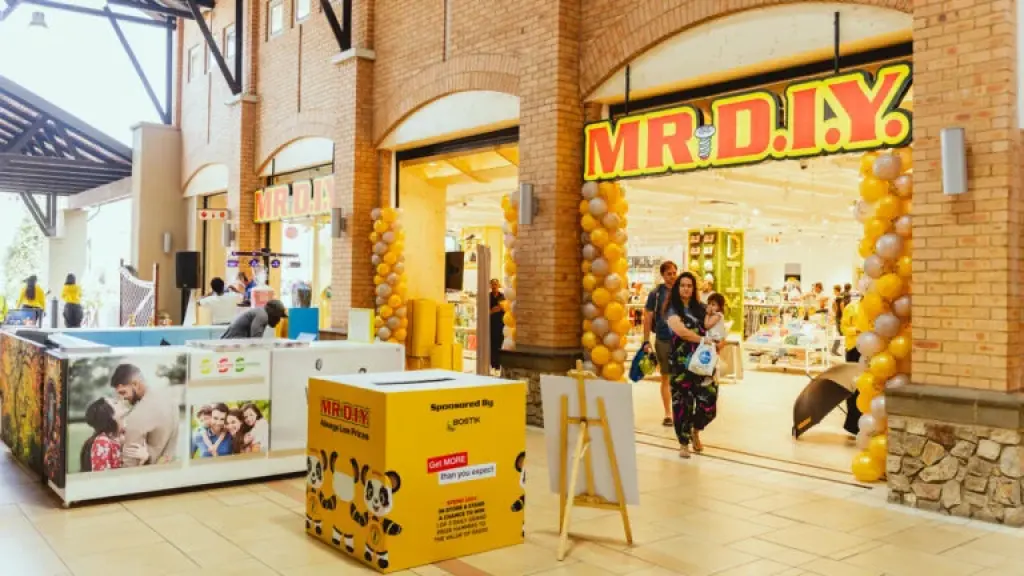
After strong interest in the brand’s first store in Pretoria’s Menlyn Mall, Mr DIY officially opened its second store in South Africa at Irene Village during the month of September.

With over 17,000 products spanning hardware, household, décor, stationery, toys, and tech accessories, the Asian giant brings major competition to existing South African brands. 

Following the pandemic-era boom in home improvement, demand for building materials has remained elevated. 


Local incumbents, such as Massmart’s Builder’s Warehouse, SPAR’s Build it, and Cashbuild, have seen strong growth in this sector, despite South Africa’s stagnant economy. 

What makes MR DIY notably different is its expansion into South African shopping malls, bringing hardware and related sales into new format in the country. 

Typically, Builder’s Warehouse, Build it, and Cashbuild are standalone stores that aim to cover anything from basic home DIY to building contractors. 

On the other hand, MR DIY solely focuses on home DIY and aims to take over this market in South Africa by being close to consumers. 


The company aims to have six MR DIY stores across South Africa by the end of the year, with two already operating. 

“South Africa is a dynamic and growing market, with increasing demand for affordable, high-quality household and lifestyle products, ” MR DIY South Africa’s Head of Business Development, Jamie Williams, said.

“As consumers become more value-conscious, our business model, built on a broad product range and a convenient shopping experience, is well-positioned to meet their needs.”


Building boom in South Africa


MR DIY aims to tap into a renewed surge in home improvement in South Africa, with the market rebounding after a spike during the pandemic. 

Sales of South African hardware stores surged during pandemic-era lockdowns as households spent heavily on improving their properties. 

Partly driven by the rise of work-from-home and forced isolation, this translated into strong financial performances for brands such as Builder’s, Cashbuild, and Build it. 


However, in the years following the pandemic, hardware sales came under pressure due to stagnant economic growth and a gradual return to the office. 

South Africa’s construction industry also came under severe pressure as the expected increase in expenditure on infrastructure to boost the economy did not materialise. 

As a result, wholesale hardware stores came under substantial pressure, with construction activity being closely tied to economic sentiment and growth. 


However, in recent months, there have been signs of a resurgence, which MR DIY aims to tap into through its aggressive store rollout. 

In its full-year results for the financial year ended 29 June, Cashbuild indicated that it was seeing a resurgence in demand for hardware supplies. 

During the year, the company opened eight new stores and closed 12 under-performing stores. It further refurbished 26 Cashbuild stores and relocated 1 P&L Hardware store. 

Cashbuild said it plans to continue its store expansion, relocation, and refurbishment strategy in a controlled manner, through its feasibility process. It added that the Cashbuild Small Model Stores opening remains on track.


However, demand for hardware supplies, and subsequently the financial performance of companies such as Cashbuild, has been highly volatile in recent years. 

With sales growth being largely limited by economic growth, immense focus has been placed on improving efficiency and maintaining margins. 

This is expected to change in the coming year as interest rate cuts and lower inflation eases pressure on household finances. 

Economists from South Africa’s largest banks expect the full impact of interest rate cuts to only be felt in the coming year as they take time to work their way through the economy. 

Access to long-term retirement savings through the two-pot system may also boost consumer spending on hardware. 


MR DIY Irene