Gayton McKenzie accused of not understanding fashion industry after his meeting with Shein
Fashion designer David Tlale said he doesn’t think Gayton McKenzie understands the complexities of the clothing and textile industry.



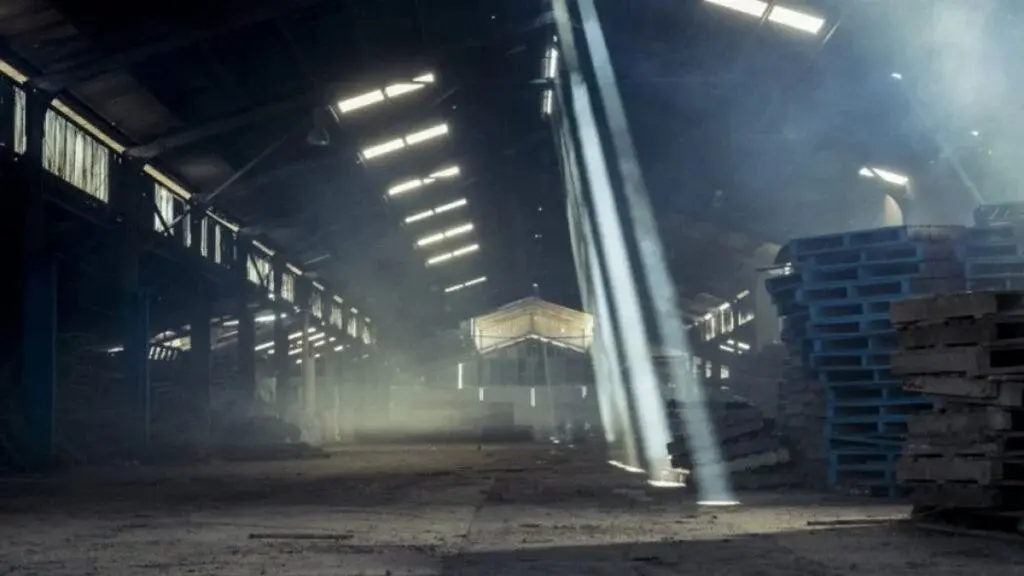
Important South African businesses, especially in the manufacturing and mining sectors, are facing closure due to the country’s unsustainable electricity price increases.
Years of rising tariffs, load shedding, and Eskom’s instability have pushed companies to the edge, with some already shutting down operations and cutting jobs.
The latest example comes from Glencore, one of the world’s largest commodity producers.
The company has started a retrenchment process at its Rustenburg ferrochrome smelter and vanadium operations because of soaring electricity costs and economic pressures.
South Africa holds around 80% of the world’s chrome ore reserves, making it a key player in ferrochrome, which is essential for stainless steel.
However, unreliable and expensive power has forced Glencore to suspend production at several smelters, including Boshoek, Wonderkop, and Lion, and to shut others in Rustenburg and Lydenburg, in recent years.
Glencore Alloys CEO Japie Fullard said the company will meet Electricity Minister Kgosientsho Ramokgopa to save its joint venture with Merafe Resources.
He warned that South Africa’s power problems have steadily destroyed the ferrochrome industry, while China has gained the advantage with cheaper electricity and labour. As a result, much of the stainless-steel supply chain has shifted overseas.
The situation is not unique to Glencore. South Africa’s biggest electricity users have also raised the alarm.
The Energy Intensive Users Group of Southern Africa (EIUG) has called on the energy regulator Nersa to review Eskom’s current tariff plan after a R54 billion mistake that will mean even higher bills.
The group said it was shocked by the lack of transparency in the decision, which forces consumers to carry the cost.
The group highlighted that electricity prices have climbed from 19.9c/kWh in 2008 to 165.43c/kWh in 2024, an eight-fold increase.
For many large businesses, electricity now makes up as much as 40% of production costs. The EIUG said the constant price hikes, volatility, and uncertainty have already caused some operations to shut down and discouraged new investment in South Africa.
Donald MacKay, CEO of XA Global Trade Advisors, said Glencore’s crisis is part of a much wider problem.
“Glencore is just at the sharp end of what is a much bigger problem, and that is that all of our energy-intensive sectors in manufacturing are at risk because of the situation with Eskom,” he said.
Unlike households that can adjust to load shedding with solar panels or backup power, he explained, heavy industry cannot easily adapt. “Glencore is perhaps the first in line, but there’s a long list of companies in a similar position.”

The government has spoken about the importance of beneficiating raw minerals locally, but MacKay said this goal is impossible without affordable electricity.
“If the government wants to execute on the strategy of beneficiation, this is a problem that has to be solved,” he said. Export restrictions or duties will not fix the root cause. Instead, the electricity crisis itself must be addressed.
MacKay also warned against quick fixes that are too costly. He pointed to ArcelorMittal’s decision to pay heavily just to keep running for another six months, saying such measures are not sustainable.
“We also can’t be in a position where everyone else has to pay a significant premium on their energy so that a small number of companies can benefit,” he said.
Instead, MacKay suggested letting big companies generate their own power. Since the cap on private generation was lifted, independent solar and wind projects have flourished, and he sees no reason why mining and industrial firms should be excluded from doing the same.
However, he added that the crisis has been years in the making. “This has been a problem that’s been coming for a very long time and has largely been ignored by the government.”
Eskom’s tariffs rose by 937% between 2007 and 2024, while inflation over the same period was just 155%.
Electricity costs have increased six times faster than inflation, leaving South Africa’s biggest industries with bills they cannot afford.
Issued on BusinessTech by Malcolm Libera | https://businesstech.co.za/news/energy/837719/important-businesses-forced-to-shut-down-in-south-africa/