Gayton McKenzie accused of not understanding fashion industry after his meeting with Shein
Fashion designer David Tlale said he doesn’t think Gayton McKenzie understands the complexities of the clothing and textile industry.



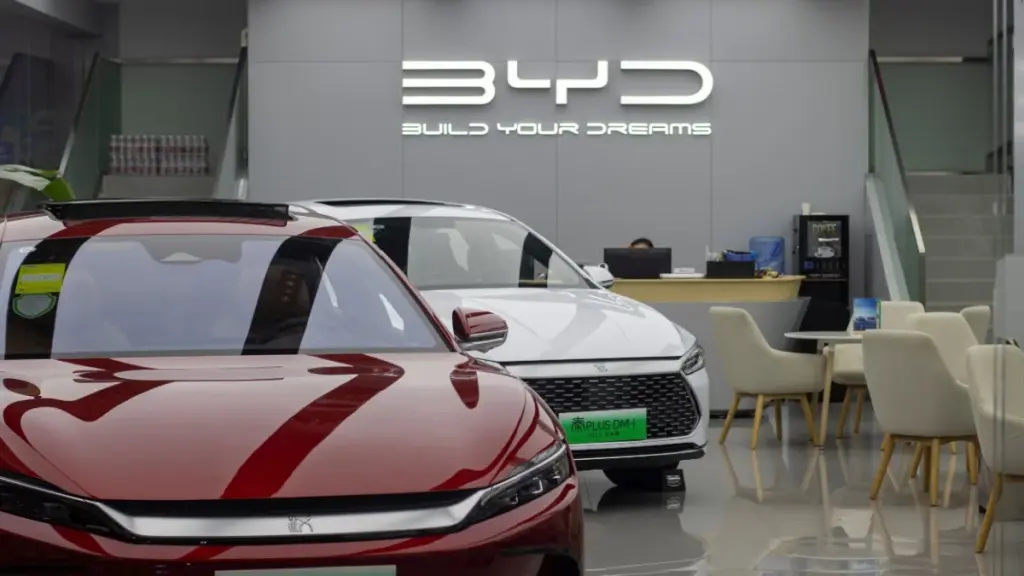
Chinese cars are beginning to dominate South Africa’s used car market after rapidly growing their new vehicle sales in the past few years.
Brands such as BYD, Jaecoo, and Omoda have seen searches for their cars on AutoTrader more than double year-on-year in 2025.
AutoTrader said these brands are now beginning to give established players in South Africa’s car market cause for concern.
Autotrader’s latest Mid-Year Report revealed that new car sales for Chinese brands have skyrocketed, and the same trends are evident in the used car market.
The report shows that sales of Chinese brands rose by 89% in the first half of 2025, led by BYD (up 637%), Omoda (up 99%), and Jaecoo (up 168%).
AutoTrader admitted that this percentage growth comes off a relatively low base, but it shows that these brands are beginning to take market share from established players.
Chinese marques have been available on the local market, in some form or another, for nearly two decades, but have only really seen strong growth in recent years.
Some brands have come and gone, others have returned stronger than ever, with product portfolios that rival the very best Japan, Europe, and Korea have to offer, AutoTrader said.
This competitive pricing edge has not gone unnoticed by South African consumers, whose preferences are gradually shifting.
Whereas brand cachet was once a concern, many buyers are now prioritising value over other aspects, such as brand and prestige, and demand more from their cars at the same or lower price point.
Several Chinese brands have taken advantage of this and have infiltrated the market with great success, with all brands showing increases in year-on-year sales, according to AutoTrader’s data.
Even more established brands such as Haval, Chery, and BAIC, for example, saw growth of 33%, 14%, and 16%, respectively.
The table below, courtesy of AutoTrader, shows the rapid growth of Chinese brands in South Africa over the past year.

Autotrader said that, in addition to sales, other indicators suggest that these brands are poised for even more growth locally.
Searches for Chinese cars on AutoTrader climbed by 67% year-on-year, reflecting growing interest from a relatively smaller starting point.
Enquiries increased by 81%, and unique advert views have doubled, showing that attention for these brands is accelerating even as their overall presence in the market remains emerging.
This is more than a sales increase; it’s a structural shift in the market,” AutoTrader CEO George Mienie said.
“Chinese automakers have found a way to deliver exceptional value at a fraction of the traditional cost, offering roughly 80% of what buyers expect for only 60% of the price.”
That’s changing what South Africans consider possible when it comes to affordability and technology, with new benchmarks being set that all automakers will have to meet.
Aside from the value proposition, several Chinese automakers, including Chery, BYD, Omoda, and Haval, are introducing well-priced electrified vehicles to the market.
Hybrids and plug-in hybrids are typically more expensive than their traditional petrol and diesel counterparts, placing them out of reach for many South Africans.
However, Chinese brands have targeted this segment specifically, with the Haval H6, Haval Jolion, and GWM Tank 300 ranking among the top ten best-selling hybrid cars between January and June 2025.
BYD is the big Chinese player in this area of the market, as it which currently only sells PHEV and EV models like the Shark 6 bakkie and Dolphin in South Africa.
It saw a notable 463% increase in searches, while Jaecoo saw searches rise by 218%, highlighting strong interest for these new brands, even from a modest initial audience.
Enquiries on BYD vehicles, however, saw a remarkable 1,369% increase, showing that consumers are becoming increasingly open to the idea of owning not only a Chinese car, but an electrified one.
Mienie explained that Chinese brands are increasingly meeting consumer demand for accessible pricing, contemporary design, and technological features.
Crucially, this indicates that their presence this time around will be permanent, with many brands becoming fixtures among the most popular in the country.
Issued on Daily Investors by Shaun Jacobs | https://dailyinvestor.com/south-africa/100542/chinese-cars-taking-south-africa-by-storm/