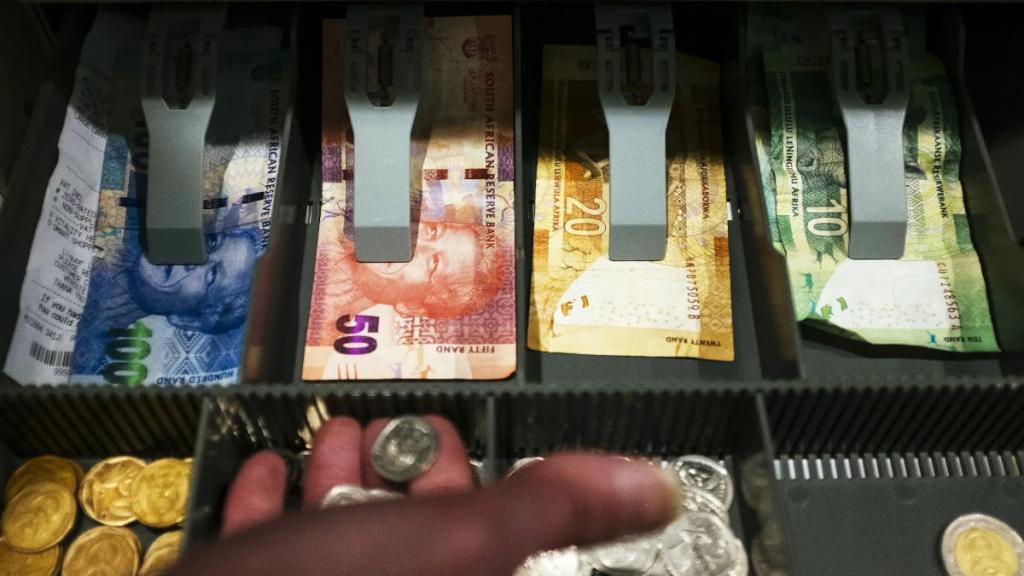
While there is a concerted effort to make South Africa less reliant on cash, the latest PayInc Economic Index (PEI) shows that demand for coins and notes has increased 4.4% from last month.
According to PayInc, formerly BankservAfrica, this shows how enduring cash is in South Africa’s economy.
Even though cash demand is climbing, the group did note positive momentum for digital payments, which also continues to reflect monthly growth.
“However, we’re well-aware that inclusion (into digital payments) requires meeting consumers where they are by bridging cash to digital, and making daily digital payments the simplest, trusted choice,” it said.
The SARB has stated its ambitions to make the country less dependent on cash, with digital payments seen as safer and more cost-effective.
This is proving to be relatively successful, with growth in transactions in South African now being led by Real-Time Clearing, DebiCheck, and PayShap, PayInc noted.
These details are all contained in the new PayInc Economic Index, which carries a new methodology from the previous BankservAfrica Index, but still tracks the overall health of South Africa’s transaction economy.
PayInc cleared a record 177.8 million transactions in August, slightly above 177.5 million in July, and up 9.4% year-on-year. By value, electronic transactions eased to R1.351 trillion from R1.405 trillion in July.
Meanwhile, cash demand stayed firm, rising 4.4% month-on-month in real terms, according to PayInc’s Integrated Cash Management System (ICMS) data.
Notably, the index shows that South Africa economy continues to show surprising resilience in the face of mounting pressure points, with economic activity holding firm.
For August 2025 the index showed a fourth month of consecutive gains, showing clear signs of economic resilience amid persistent headwinds.
The index level reached 102.8 in August 2025, up 1.3% from July’s level. Year-on-year, the index is up 3.7%, indicating that the Q2 uptick has carried into Q3 despite uncertainty and weak confidence.
The better-than-expected GDP outcome for Q2 at 0.8% q/q also confirmed this narrative of resilience, the group said.
Things are looking up
Independent Economist, Elize Kruger
Stats SA reported GDP growth of 0.8% quarter-on-quarter for Q2, up from a flat 0.1% in Q1. The reading surprised on the upside, following forecast expectations of 0.5% growth for the quarter.
“The improvement, as reflected in the PayInc Economic Index over the past few months, is surprising given the domestic and global challenges this year,” said Elize Kruger, Independent Economist.
Higher import tariffs, inefficient rail and port infrastructure, pressure on key trading partners, and cheaper imports squeezing local firms have created a highly challenging operating environment.
This is reflected in subdued sentiment with the RMB/BER Business Confidence Index falling to 39 in Q3, below its long-term average of 42, indicating that just over 60% of firms are dissatisfied with current conditions.
While the economy may be treading water, retail remains strong with real sales rising by 3.8% in the first half of 2025, beating the broader economy.
According to Kruger, the economy is being supported by lower inflation—set to average at 3.4% in 2025, compared to 4.4% in 2024—giving the South African Reserve Bank scope to cut interest rates by 75 bps year-to-date in 2025, easing pressure on households and firms.
With average pay rises above 5%, 2025 should deliver a second year of real salary gains, supporting consumer spend.
In line with PayInc Economic Index’s August uptick, other timely indicators point to firming momentum.
Naamsa revealed strong performance with total vehicle sales rising by 18.7% year-on-year in August, with year-to-date sales up by 14.5% compared to a year earlier, while new car sales grew by 22.5% year-on-year and 21.3% ahead on an annual basis.
The S&P Global South Africa Purchasing Managers’ Index held just above expansion at 50.1 in July, while the seasonally adjusted Absa Purchasing Managers’ Index slipped to 49.5, underscoring ongoing pressure in manufacturing.
Overall, while some sectors continue to perform well, the economy remains subdued and the outlook for the remainder of 2025 is uncertain.
Broad-based job cuts reflect the underlying strain and will likely place downward pressure on the economic activity in the final months of 2025.
“Even with the real GDP growth for 2025 stabilising at 1% in 2025 from 0.6% in 2024, the economy is still lagging behind population growth, leading to living standards stagnating for South Africans,” said Kruger.
Economists at Nedbank are optimistic that the growth momentum will continue into Q3 and Q4, lifting overall GDP forecasts for the year to 1.2% (from 1% before) and averaging 1.5% over the next three years.
South Africa could soon see a credit rating upgrade amid significant improvements in the state’s finances—even if escaping junk status will require patience.