Gayton McKenzie accused of not understanding fashion industry after his meeting with Shein
Fashion designer David Tlale said he doesn’t think Gayton McKenzie understands the complexities of the clothing and textile industry.



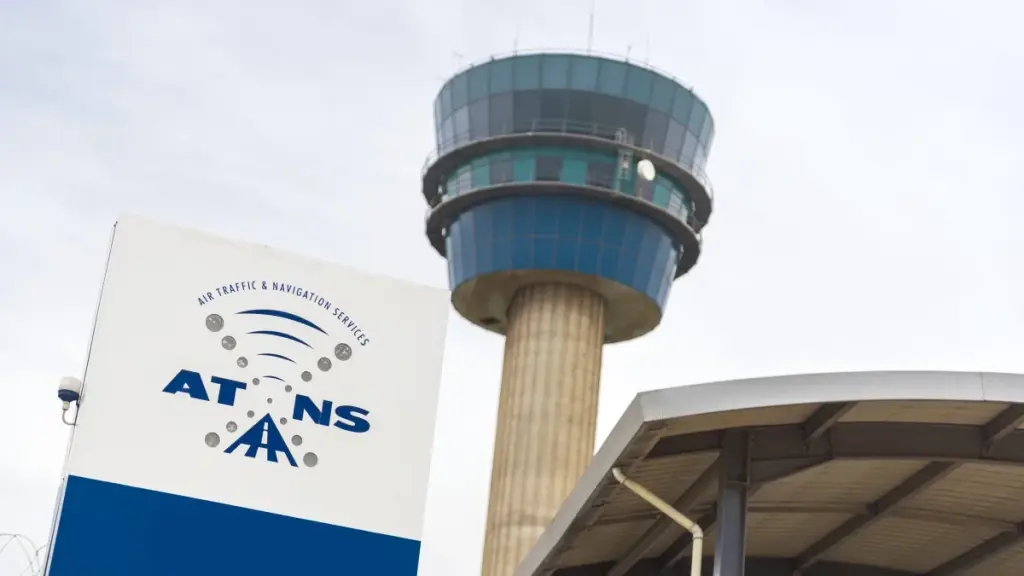
The South African government is hiring a host of new employees at Air Traffic Navigation Services (ATNS) to address safety concerns caused by regulatory failures and understaffing.
This is according to Transport Minister Barbara Creecy, who told Newzroom Afrika that her department is currently verifying 37 candidates as part of its plan to expand aviation capacity.
Creecy previously appointed an intervention team after ATNS failed to meet administrative deadlines in reviewing hundreds of crucial instrument flight procedures (IFPs) in South Africa.
IFPs are predetermined departure, arrival, and landing manoeuvres to ensure aircraft avoid obstacles while facilitating an orderly flow of air traffic.
However, if these IFPs are not up to date and bad weather creates low-visibility conditions around airports, pilots can’t land their planes.
ATNS’s failure to review IFPs at the King Phalo and George airports led to disruptions in March as pilots could not land during low-visibility conditions.
An investigation sanctioned by Creecy found that while Airports Company South Africa (ACSA) had requested the review of the IFPs, ATNS ignored this request.
At the time, the minister also said that 66 IFPs were due to expire at airports nationwide on 10 April. Two days before the deadline, ACSA announced that ATNS had made progress.
However, it also said that IFPs at three airports had been temporarily suspended, meaning they were inaccessible during low-visibility conditions.
These were the Richards Bay, Upington, and Braam Fischer airports. Travellers using these terminals were advised to check with their airlines for updated flight schedules.
However, these failures are nothing new, with industry players referring to ATNS as a crisis waiting to happen.
Former Airlink CEO Rodger Foster said the entity had created “a major safety risk” by withdrawing IFPs, which obliged pilots to operate aircraft with far narrower margins for error.
Similarly, Aaron Munetsi, CEO of the Airlines Association of Southern Africa (AASA), mentioned the knock-on effect of ATNS’s mismanagement on airline finances.
He said this is primarily caused by the costs incurred following air traffic disruptions while trying to meet customer commitments.
Barbara Creecy, Transport Minister
As part of her efforts to stabilise ATNS and allow for aviation expansion in the country, Creecy also said that her department has “reestablished the trainee pipeline.”
“South African air traffic controllers are in great demand internationally, and we have to ensure we have a constant supply for ourselves,” she said.
Plane Talking managing director Linden Birns said that the sector’s shortage of qualified air traffic controllers, radar controllers, and instrument flight procedure designers is emerging as a global trend.
“This was made worse by the Covid-19 pandemic and the near-total grounding of commercial flights,” Birns said.
“It led to many experienced people being lost to the industry either by way of retrenchments, early retirement, death or other attrition.”
Birns said the demand for a smaller talent pool has led to frequent recruitment drives by air navigation service providers in other parts of the world.
Countries like Australia and the United Arab Emirates have recruited many South African controllers with lucrative remuneration packages and benefits.
However, the South African government’s budget cuts on defence spending further exacerbate the problem.
“Depending on the skill and particular competency, it can take several years to recruit, train and qualify a controller,” Birns said.
He says the South African Air Force was always a feeder for commercial pilots and civilian air traffic controllers in the country, but its fleet and annual flying hours have been reduced.
“As a result, it no longer represents an attractive or viable pathway to a civilian career as an airline pilot or air traffic controller,” Birns added.
Issued on Mybroadband by Daniel Puchert | https://mybroadband.co.za/news/motoring/601326-air-travel-turnaround-in-south-africa.html